







Search Results for: Reserve flagship store
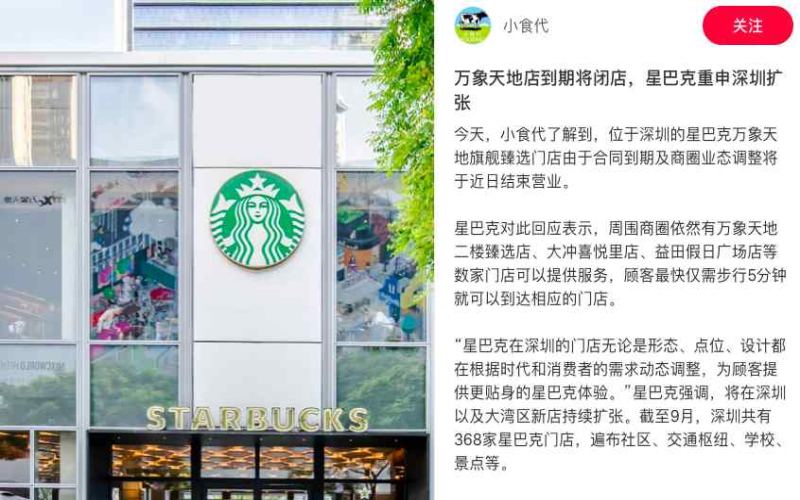
After nearly eight years in operation, Starbucks' first Reserve flagship store in South China has announced its permanent closure, and the standalone store in Shenzhen MixC World will change hands.
Starbucks' first Reserve flagship store in South China—the two-story standalone store at Shenzhen MixC World—will officially close permanently after business hours on October 12. This iconic store, which had been open for nearly eight years, was once the largest standalone Starbucks in Shenzhen, and it now comes to an end due to the expiration of its contract and adjustments in the business district's tenant mix. After the news spread, many regular customers felt deep regret. At the same time, Starbucks has also been closing stores at multiple locations in Shenzhen, sparking speculation about adjustments to its market layout. This article will review the store's history, customer reactions, the reasons for its closure, and Starbucks' response, along with related recommendations from Front Street Coffee. [more…]
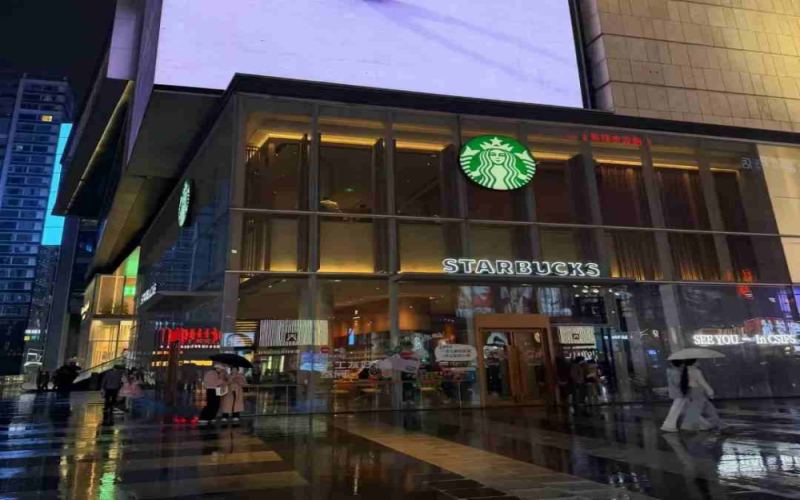
Changsha's largest Starbucks Reserve store announces closure, the IFS landmark location will welcome a new owner
Once hailed as the "most beautiful Starbucks in Changsha," the IFS Reserve store is about to close its doors. This flagship outlet, which opened in 2018 with a two-story space and several brand-first designs, has been confirmed to permanently close after business hours on the evening of March 21 due to lease expiration and adjustments to the mall's business mix. From its Black Eagle coffee machine to its academy-style reading area, it created check-in memories for countless coffee lovers and was regarded as a landmark of Changsha's urban lifestyle aesthetics. Now, the original site will be taken over and renovated by the trendy toy brand Pop Mart, leaving many residents and visitors deeply reluctant to see it go. [more…]
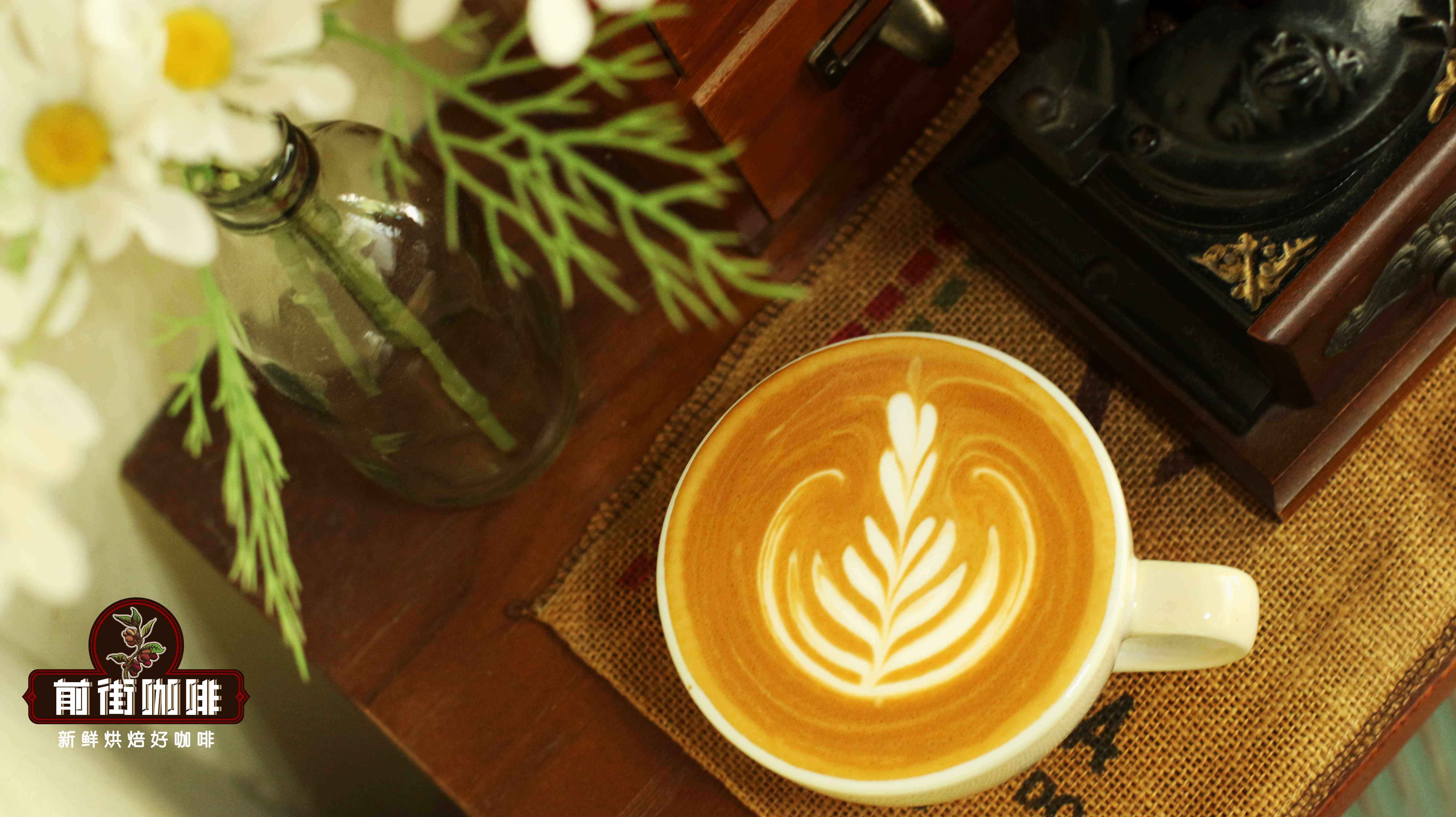
A Global Roundup of Famous Coffee Brands | An Analysis of the Characteristics and Historical Background of Blue Bottle, Starbucks Reserve, Peet's, and Other Brands
From San Francisco in the United States to Kyoto in Japan, from London to Guangzhou, every well-known coffee brand has a unique development story and flavor philosophy behind it. This article systematically reviews internationally representative brands such as Blue Bottle Coffee, Starbucks Reserve, % Arabica, Peet's Coffee, and Costa Coffee, interpreting their respective founding backgrounds, core positioning, and product features. It also introduces the business philosophy and bean-selection advantages of the Guangzhou-based local brand Front Street Coffee, helping coffee lovers find the cup that suits their taste while learning about brand culture. [more…]
International Coffee Brand Recommendations | What Are the World's Well-Known Coffee Brands? What Are the Characteristics of Starbucks, COSTA, and %Arabica?
Front Street Coffee Introduction: Front Street Coffee (Frontsteet Coffee), founded in 2013, is a well-known local coffee brand in Guangzhou, specializing in house-roasted coffee beans and offering over 50 varieties of fresh coffee, available for online purchase through its Tmall flagship store and Taobao shop. Over the years, Front Street [more…]

A Comprehensive Guide to Kenyan Coffee: Starbucks Reserve Kenya Bean Prices, Flavor Characteristics, and the K72 Processing Method
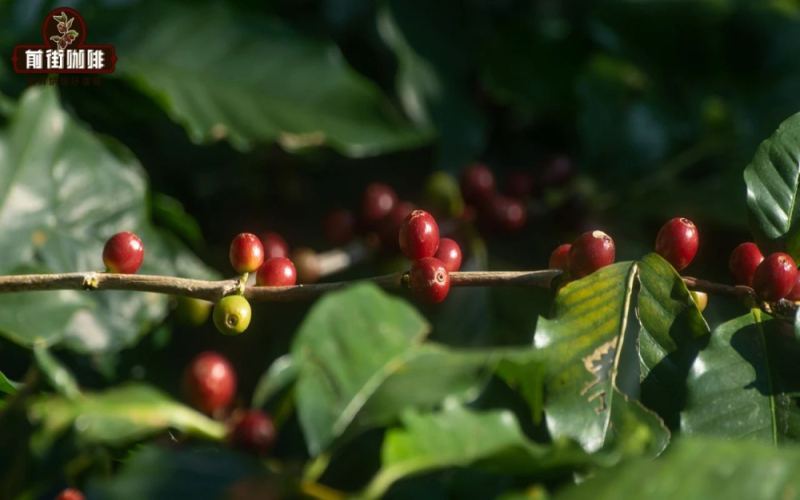
Kenyan coffee has long been renowned for its strong, full-bodied acidity and distinctive cherry tomato and prune flavors, standing alongside Ethiopia's Yirgacheffe as one of Africa's two flagship coffees. Starbucks has offered Kenya coffee since 1971, and the elephant design on its packaging has become a classic emblem. This article will comprehensively analyze the reasons behind the formation of Kenyan coffee's flavor—from the growing conditions of its producing regions, varietal characteristics, and the K72 washed processing method to the coffee bean grading system—and share detailed information on the AA-grade Kenyan cherry tomato and PB-grade coffee beans introduced by FrontStreet Coffee, including roasting parameters and brewing suggestions, to help coffee enthusiasts gain a deeper understanding of this premium producing region. [more…]
Ethiopian Coffee vs. Geisha Variety Comparison: Flavor Characteristics of Kafa Wild Forest Washed Beans and V60 Brewing Method
Ethiopia, as the birthplace of Arabica coffee, is home to numerous well-known growing regions, and the Geisha variety takes its name from the Geisha Mountain in the country's Kafa forest. Starting from Front Street Coffee's everyday bean series, this article systematically reviews Ethiopia's coffee-growing conditions, its main producing regions, and the wild coffee characteristics of the Kafa Biosphere Reserve, while comparing in detail the essential differences between the native heirloom varieties of the Kafa forest and the Panamanian Geisha variety. It also introduces the flavor profile of Front Street's washed Kafa Forest coffee beans, along with the specific parameters and techniques for three-stage extraction using a V60 dripper, helping coffee enthusiasts understand more clearly the relationship between Ethiopian coffee and Geisha. [more…]
Comparing Product Lines from Gesha Village Estate: A Full Analysis of Flavor Differences Between Auction Lot, Gold Label, Red Label, Green Label, and Chaka
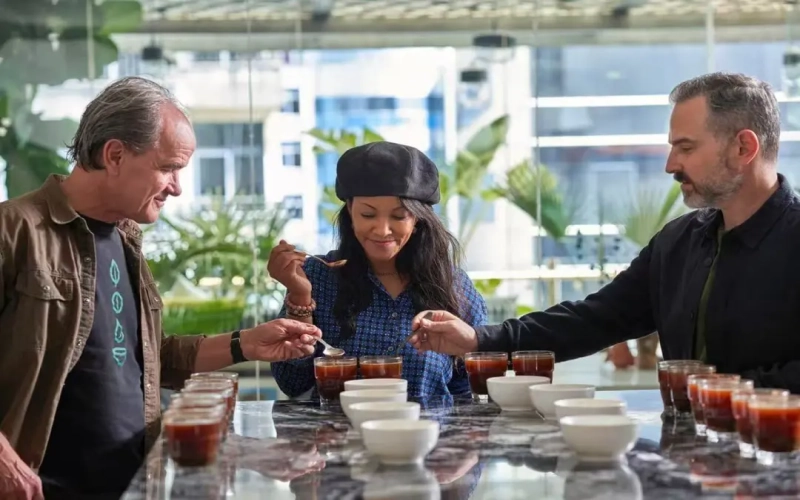
Located in Bench Maji, Ethiopia, Gesha Village Coffee Estate was established by Adam Overton after venturing deep into ancient forests to search for seeds between 2007 and 2011. The estate is internally divided into multiple product lines: Auction, Gold, Red, Green, and Chaka, each with clear differences in variety selection, production proportion, screening standards, and flavor presentation. Front Street Coffee will guide you through the three varieties grown at Gesha Village Coffee Estate—Gesha 1931, Gori Gesha, and Illubabor Forest 1974—and break down in detail the definitions and cup profiles of each product line, helping you find the Ethiopian Gesha that best suits your taste. [more…]
Coffee Bean Brand Recommendations and Variety Analysis: A Buying Guide from Brazil Yellow Bourbon to Espresso Blends
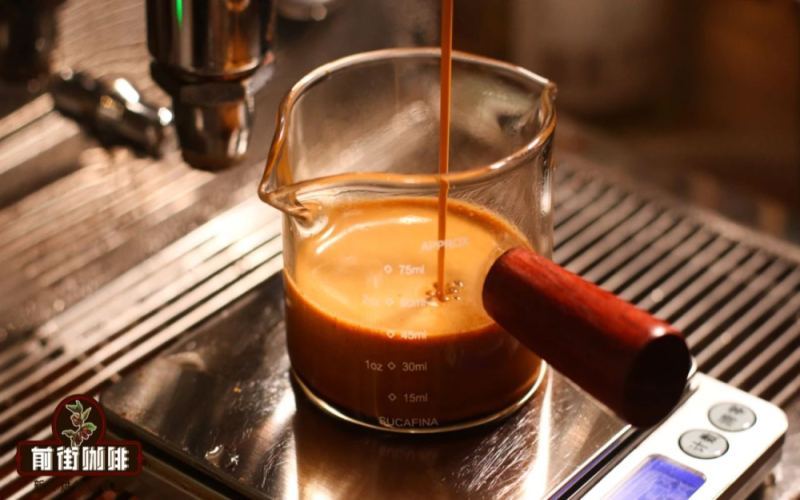
Faced with a dazzling array of coffee beans, beginners often don't know where to start. This article systematically sorts out popular coffee beans that combine different styles with good reputations, covering Brazil Queen Estate's Yellow Bourbon, Colombia Huila's washed beans, Indonesia Golden Mandheling, Papua New Guinea Bird of Paradise, Brazil Red Bourbon, as well as Front Street Coffee's Strawberry Candy espresso blend and Classic Blend. It also reviews representative brands such as Front Street Coffee, Blue Bottle, Starbucks Reserve, % Arabica, Peet's, and Costa, helping readers start from origin, variety, processing method, and roast level to find the cup that suits their taste. [more…]
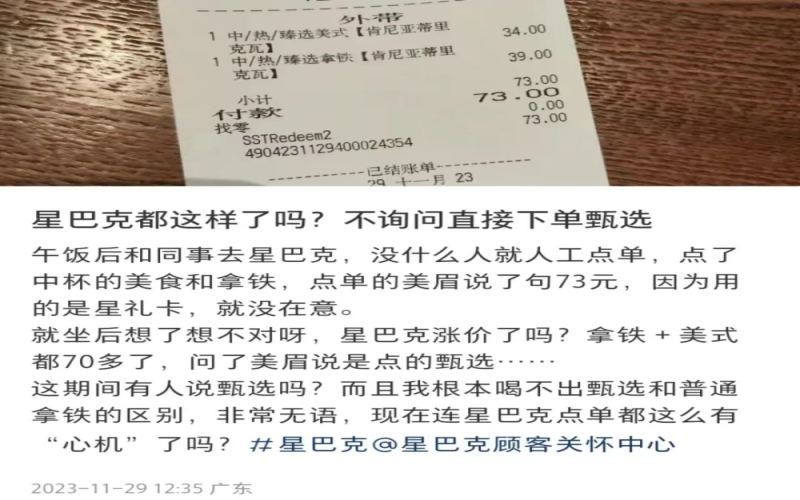
Starbucks Accused of Defaulting to Reserve Coffee in Orders, Sparking Controversy; Store Eventually Admits Fault and Issues Refund
A customer at a Starbucks Reserve store, while paying with a Starbucks Card, discovered that two drinks had been upgraded by default to the pricier Reserve coffee, and during the ordering process the staff never mentioned the word "Reserve." This "default Reserve" incident sparked widespread discussion, with many netizens sharing similar experiences, and a former Starbucks employee also revealed it may be related to KPI assessments. Starbucks customer service initially gave a vague response, but the store eventually admitted the mistake and promised a refund. At the heart of the incident are customers' right to be informed and their right to choose, and it also prompts reflection on where exactly the boundary lies between ordering at a Reserve store and a regular store. [more…]
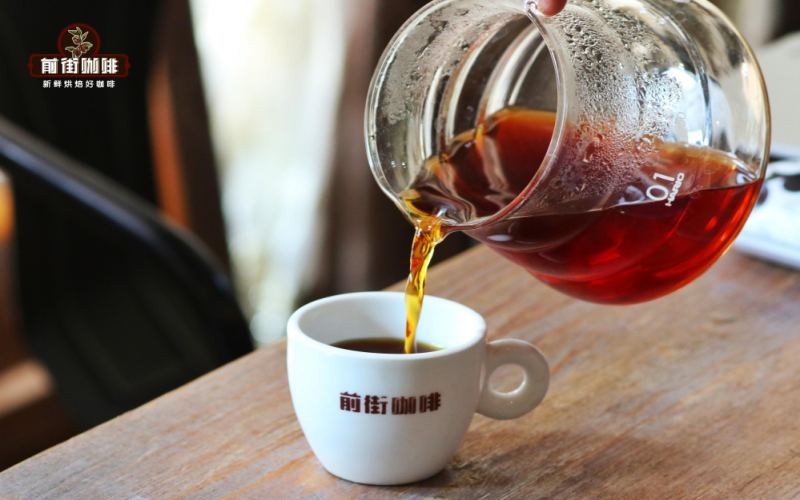
Starbucks Reserve Coffee Menu Prices and Ordering Methods: Bean Standards and Analysis of the Four Key Bean Selection Criteria
Starbucks Reserve and regular stores have clear differences in branding, brewing methods, and experience. Their menus include both drinks priced the same as regular stores and specialty beverages and pour-overs made with specialty beans available only at Reserve stores, which are relatively more expensive. This article will explain Reserve coffee's bean selection standards—terroir conditions, processing methods, coffee varieties, and human stories—and introduce how to consult staff when ordering based on flavor and taste. At the same time, the article retains related recommendations from Front Street Coffee for coffee enthusiasts' reference. [more…]

After eight years of operation, the Starbucks Reserve store at Wuhan Tiandi has closed, the original site will welcome a sports brand, and a mobile coffee truck will take over operations.
Recently, construction hoarding has gone up at the former site of the Starbucks Reserve store in the Wuhan Tiandi Xintiandi district, as the sportswear brand lululemon is set to move in. This Reserve store, which opened in 2016, was once Starbucks' third store in China to offer nitro cold brew and featured the country's first Barista Craft Room creative space, and was officially defined as "the most Wuhan Starbucks Reserve store." Over eight years, it became a landmark in the district and a top choice for relaxation in consumers' hearts thanks to its unique environment and art wall. Now its quiet departure has prompted many netizens to express regret. As for the reason for the closure, outsiders speculate that it is related to too many nearby stores or rising rent. Starbucks is currently maintaining operations in the Xintiandi inner street with a mobile coffee cart, and whether it will reopen in a new location remains to be seen. [more…]
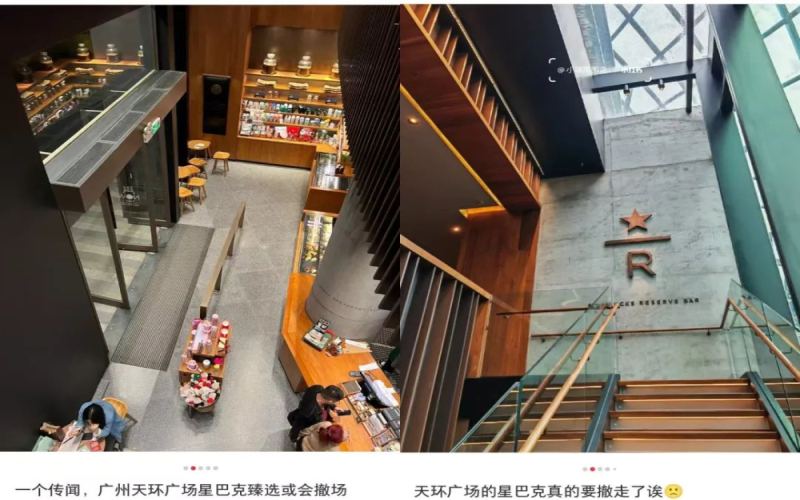
Starbucks Reserve at Parc Central in Guangzhou Confirmed to Close: Why Do Stores in Core Commercial Districts Also Struggle to Survive?
Recently, news emerged that the Starbucks Reserve store at Guangzhou's Parc Central is set to close, with official confirmation that it will officially cease operations in the coming days. This store, which opened in 2017, was created by Starbucks to celebrate its 15th anniversary of entering the South China market and was once hailed as "one of Guangzhou's most design-forward stores." Unlike previously closed old stores located in declining foot traffic commercial districts, this closure is in a core commercial area of Tianhe District, surrounded by luxury brands, and the store was almost always full on a daily basis. However, high rent, low table turnover caused by the open-plan space, and phenomena such as "people only checking in for photos without consuming" may have made it difficult for the store to be profitable after deducting costs. Starbucks stated that the reason for the closure is adjustments to the business mix in the commercial district and said there are still more than 10 nearby stores for consumers to choose from. [more…]

Starbucks Reserve Roastery Bids Farewell to the Princi Brand: A Turning Point and Reflection on the High-End Dining Integration Strategy
Starbucks recently decided to remove the Italian bakery brand Princi from eight of its Reserve Roasteries in the United States and China, a move that has drawn widespread attention. Since the partnership began in 2016, Starbucks had sought to use Princi to deeply integrate coffee, baking, and dining, creating a unique third-place experience. However, affected by the pandemic and policy, Princi's standalone stores were closed one after another. Now that the brand has withdrawn from the roasteries, it not only means that the goal of global expansion has fallen through, but also reflects a setback in Starbucks' vision of premiumization and expansion of its food product line. New CEO Brian Niccol has promised a return to the positioning of a community coffee shop, and this decision had already been finalized before he formally took over. Starbucks' move may be a response to current sales challenges, but the specific reasons were not disclosed in an internal memo. [more…]
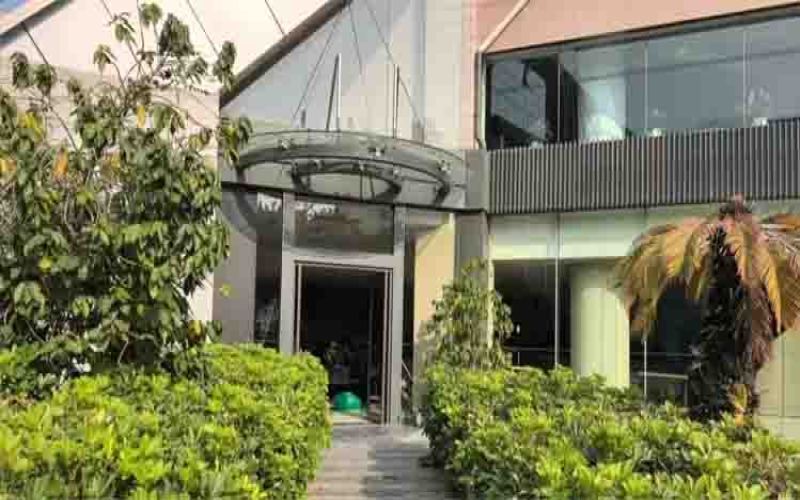
After fifteen years of operation, the Starbucks Reserve store on Ersha Island in Guangzhou has permanently closed upon lease expiry; the successive exit of long-standing stores across multiple cities has prompted coffee enthusiasts to reminisce.
Recently, the Starbucks Reserve store next to Xinghai Concert Hall on Ersha Island in Guangzhou was confirmed to have permanently closed after fifteen years in operation, a piece of news that surprised and saddened many regular customers. This store, which opened in 2010, was once one of the most representative coffee shops on Ersha Island. After its lease expired, it quietly withdrew without prior announcement, sparking collective memories among nearby residents and coffee enthusiasts. Meanwhile, Starbucks old stores or specialty stores have also been closing one after another in cities such as Jiangmen, Beijing, Changzhou, and Chengdu, including the city's first pour-over store and old stores that had been operating for more than ten years. For many coffee fans, Starbucks was once the starting point for stepping into the world of coffee. The disappearance of these stores is not just the exit of a shop, but also carries countless personal memories and urban emotions. [more…]
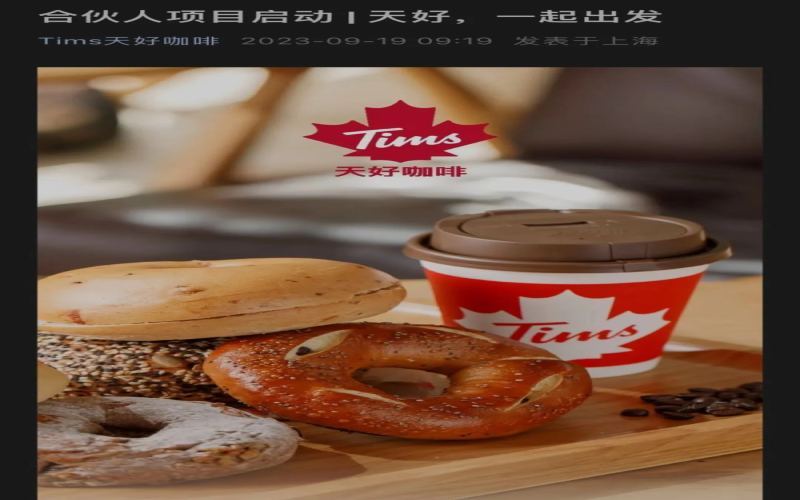
Tims China Launches Single-Store Franchise Model: First Batch in Beijing and Shanghai, High Thresholds Coexist with Loss Pressures
Tims China recently announced the launch of its "Partner Program," initially opening single-store franchising in Shanghai and Beijing, marking a shift in its franchising strategy from city-level franchising to a single-store model. However, the startup capital of over 600,000 yuan, its persistently loss-making financial performance, and the fiercely competitive market environment have sparked widespread discussion about this move. This article sorts through Tims' franchising details, cost structure, market background, and consumer feedback, exploring whether, amid intensifying competition in the coffee sector, opening single-store franchising is its "big move" to accelerate expansion or a reluctant response to difficult circumstances. [more…]
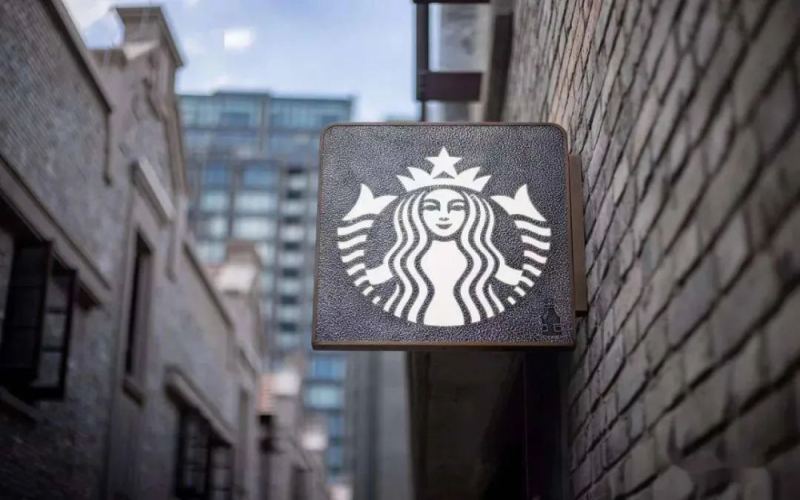
Starbucks Debuts First Intangible Cultural Heritage Concept Store in Shanghai: Blending Shanghai and Yunnan Craftsmanship, Redefining the Third Space
For professional coffee knowledge exchange and more coffee bean information, please follow Coffee Workshop (WeChat public account: cafe_style) For more specialty coffee beans, please add the personal WeChat of Front Street Coffee (FrontStreet Coffee), WeChat ID: qjcoffeex Starbucks has opened Shanghai's first intangible cultural heritage concept store in Shenyu Li at the Suhewan Mixc World in Jing'an, Shanghai, which began trial operation on September 30. This store combines Yunnan ethnic minority craftsmanship with the design concept of Shanghai qipao, creating a unique venue that serves both as a third place and as an intangible cultural heritage art exhibition space. The store offers Reserve Yunnan coffee beans and incorporates interactive experiences such as siphon coffee brewing. This move continues Starbucks' public welfare trajectory since the "Rural Mothers Acceleration Plan" in 2020 and also echoes the current trend of guochao consumption. [more…]
Starbucks' all-ice Americano with one less shot of espresso raises questions: is reduced staff training causing quality control fluctuations?
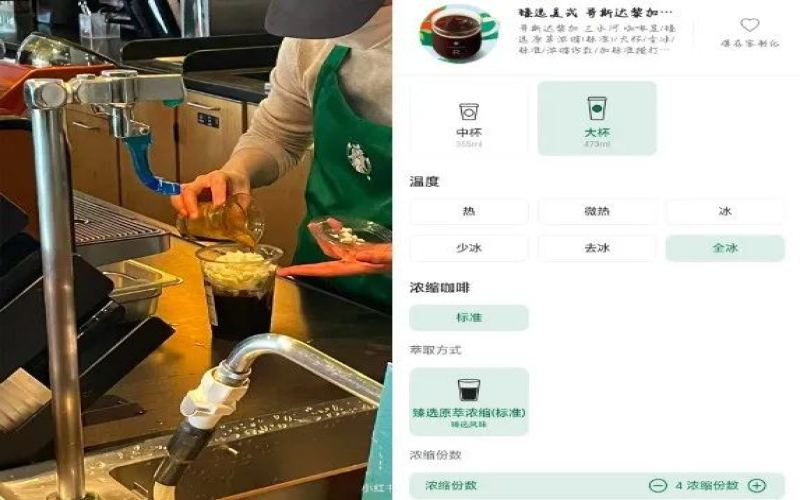
On the first day back to work, a customer ordered a large Reserve iced Americano at Starbucks, which should have contained four shots of espresso, but only received three. After the staff admitted the mistake, they added an extra shot without asking and returned the drink. This was not an isolated incident; previously, the same store had also missed caramel drizzle on a Caramel Macchiato. Consumers began to question whether Starbucks was cutting corners in its offerings, while employees explained that Reserve bean hoppers typically extract two shots at a time, so normally two extractions would yield four shots, and the shortage was likely due to a misremembered recipe. Meanwhile, on social media, there were continuous complaints about Starbucks lattes tasting weak, hot drinks not filling the cup, and missing hazelnut pieces on whipped cream, along with occasional issues with service attitude. Some employees revealed that after accelerated store expansion, training time was compressed, staff quality varied, and quality control became unstable. Front Street Coffee always pays attention to quality and service trends in the coffee industry. [more…]
Starbucks Reserve Blue Mountain Coffee Beans Explained: Jamaican Origin Varieties, Flavor, and Authenticity Identification Points
Starbucks Reserve stores release limited quantities of Jamaican Blue Mountain coffee beans every two years, sourced from Wallenford Estate, priced at about 398 yuan for 250 grams, with only about 3,500 bags available nationwide. Meanwhile, Front Street Coffee sells Blue Mountain No. 1 from Clifton Mount Estate, priced at 158 yuan/100 grams, which is the only estate in Jamaica with Rainforest Alliance certification. This article focuses on Blue Mountain coffee's origin and terroir, the evolution of the Typica variety, methods for identifying authenticity, the flavor differences between washed and natural processing methods, and Front Street Coffee's roasting recommendations and brewing parameters, helping coffee enthusiasts gain a comprehensive understanding of this legendary coffee. [more…]
After 24 years as a landmark, the Starbucks Shanghai Xintiandi store closes on December 16, and with it a generation's coffee memories come to an end.
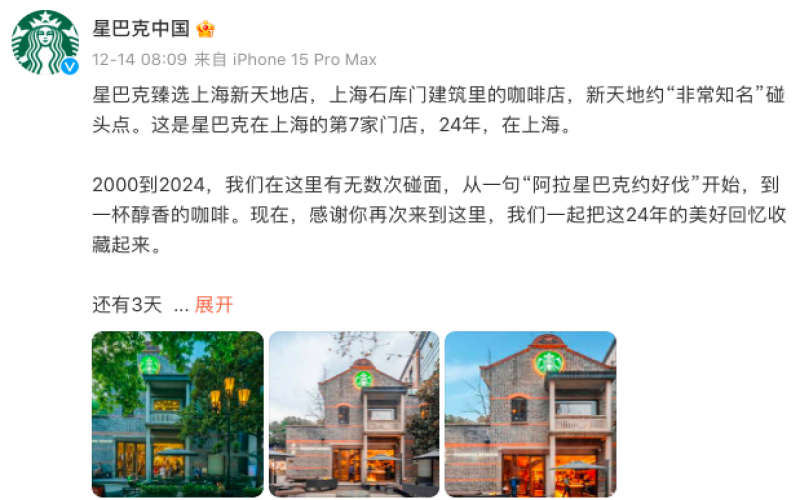
Starbucks officially announced recently that its seventh store in Shanghai—the standalone Shikumen building store located at the main entrance of the Xintiandi commercial area, opened after the company entered Shanghai in 2000—will permanently close on December 16. This landmark coffee shop, which has accompanied Shanghai residents for 24 years, was renovated multiple times and upgraded to a Reserve store in 2021, holding countless memories of dates, study sessions, and daily coffee runs for many people. The closure announcement has sparked widespread regret, with netizens speculating that it may be due to failed rent negotiations after the lease expired. Meanwhile, several long-operating Starbucks stores in Shanghai have also closed one after another, prompting sighs that an era is quietly coming to an end. [more…]
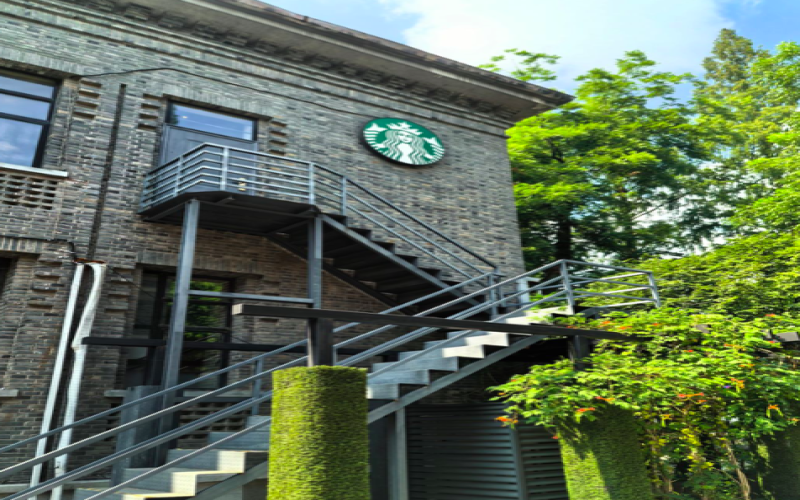
Starbucks and Chayan Yuese successively exit Nanjing 1912 District, the curtain falls on a 20-year-old store, sparking nostalgia and reflection.
Recently, news came from Nanjing 1912 Block: the Starbucks Reserve store, which has been in business for twenty years, is about to close, and Chayan Yuese, which only moved in last year, has already been the first to withdraw due to the expiration of its lease. The successive departure of these two adjacent stores has left many citizens and tourists feeling regretful. As Nanjing's first Starbucks Reserve store, this Republic of China-style coffee shop was once a popular check-in spot in travel guides, but now it is about to come to an end. Issues such as the expiration and recovery of property rights in the old block, the rise of emerging commercial districts, and parking difficulties have all become focuses of discussion. In any case, this coffee memory that has accompanied people for twenty years is worth savoring in detail. [more…]